Overview
The School of Veterinary Science – Tāwharau Ora advances knowledge in animal health and welfare, biosecurity, conservation, and sustainable productivity.
We are a world leader in our field, working with governments, other universities, international and national organisations, and companies to improve animal health, welfare and production, and human health.
Te Tiriti o Waitangi at Massey
At Massey we are Tiriti-led, upholding te Tiriti o Waitangi principles through our practice. We embrace this not just as an obligation but as a real opportunity for the nation and its people.
Te Tiriti o Waitangi ki Te Kunenga ki Pūrehuroa – The Treaty of Waitangi at Massey
Tāwharau Ora, the te reo Māori name gifted to the School, encapsulates our aim to be a place of wellbeing, healing and recovery for people and animals. Tāwharau can be translated as shelter or haven, and the meanings of Ora include health, safe, recover and heal.
These concepts guide our course planning and research, how we interact with each other, and staff and students' responsibilities towards the animals we take into our care.
Study with us
Join a world-class veterinary programme. Get hands-on experience in specialist vet clinics for cats and dogs, farm animals, horses and wildlife.
Need help or know what you want to study?
Explore by area of interest
Explore a selection of qualifications relating to your interests.
Study veterinary science
Study at Massey to get hands-on experience in specialist vet clinics for cats and dogs, farm animals, horses and wild birds. Enrol today.
Our mission, purpose and values
Mission – Whāinga
Advancing animal and human wellbeing, and environmental sustainability, through veterinary education and research for Aotearoa New Zealand and the world.
Purpose – Kaupapa
To promote an environment that supports the education and development of our people to become world class veterinary professionals, educators, researchers and global citizens.
Vision – Wawata
To be world-renowned as the Veterinary School that everyone wants to be part of.
Values – Uara
Community – whānau: We value our communities and whānau.
Inclusion – mahi tahi: We embrace inclusion and encourage participation from all members of our community.
Integrity – pono: We are authentic and professional in all that we do.
Respect – aroha: We respect each other and value differing perspectives.
Innovation and excellence – auaha, hirana: We continually challenge ourselves to grow as we strive to be the best that we can be as individuals and as a community.
Wellbeing – Hauora: We prioritise the wellbeing of animals, our people and the environment.
Who we are
Our people make us who we are. Meet some of the senior leaders in the School of Veterinary Science.

Professor Jon Huxley
Jon Huxley joined Massey in May 2018 having previously worked in two UK vet schools. His clinical and research expertise is in dairy cow population health, particularly lameness and the impact of the housed environment on animal health and welfare.

Professor Jenny Weston
Jenny Weston is a Massey BVSc graduate (1994) who's worked in the Veterinary School since 2002. Jenny's clinical background is predominantly with dairy cattle and her research interests include:
- infectious diseases of cattle
- wellbeing and career experiences of veterinarians.

Professor Wendi Roe
Wendi Roe graduated from Massey Vet School in 1990 and spent 10 years in practice in NZ and the UK before returning to Massey to complete her residency in pathology. She joined the Massey faculty in 2003. Her research focuses on marine mammals, particularly the impacts of infectious diseases.
Our research
The School of Veterinary Science conducts research across a large number of species in a wide range of disciplines. Our work contributes to advances in:
- animal care and welfare
- biosecurity
- primary industries vital to the New Zealand economy
- public health.
Research teams
Examples of how our academics create and share new knowledge.
mEpiLab
Massey's Molecular Epidemiology and Public Health Laboratory (mEpiLab) focuses on the prevention and control of infectious diseases. We develop and apply new techniques to inform decision-making and improve the health of all New Zealanders.
Equine Research Centre
A unique collaboration between veterinarians, animal scientists and sport scientists to address key industry research questions. We perform scientific research and promote education to optimise the health and welfare of horses, and the productivity of the equine industry.
One Health Aotearoa
Massey veterinary scientists are part of One Health Aotearoa. An alliance of New Zealand’s leading infectious diseases researchers, this group works together on important health hazards in New Zealand.
Research centres
Our research centres seek innovative solutions to contemporary issues.
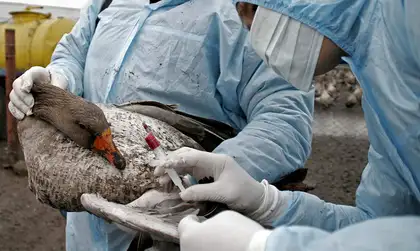
EpiCentre
EpiCentre is the largest veterinary epidemiology training and research centre in Australasia, and a leading group in the world. Our expertise includes the control of disease in animal populations, how diseases transmit from animals to humans, and hazards in food of animal origin.
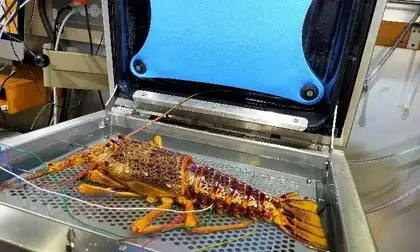
Animal Welfare Science and Bioethics Centre
Ngaio Beausoleil and Craig Johnson
The centre focuses on animal welfare in a range of human-animal interactions. This includes the use of animals in research, teaching, testing, on farms, in the home, for sport, recreation and entertainment, in service roles, zoos and the wild.
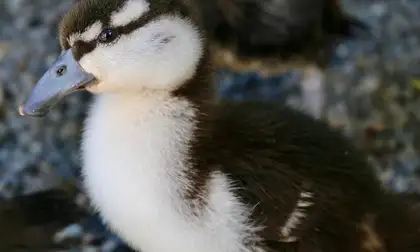
Wildbase Research Centre
Research at Wildbase promotes collaborative investigation of wildlife in support of the welfare and conservation of New Zealand native fauna. Our research expertise covers a wide range of wildlife issues.
Partnerships
The School of Veterinary Science works with government and research partners.
Veterinary Teaching Hospital
Our expert staff diagnose and treat many animal species on our Manawatū campus. We're open to the public and offer hands-on experience for veterinary students.
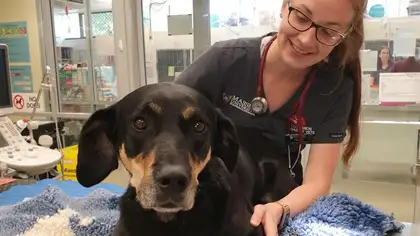
Companion Animal Hospital
From cats and dogs to birds and reptiles, the hospital cares for sick and injured pets of all shapes and sizes. This includes:
- health checks
- spays and neuterings
- vaccinations.
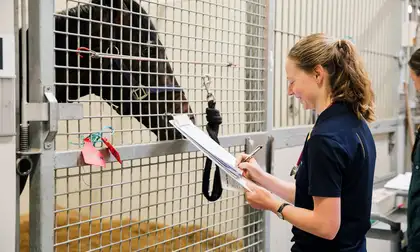
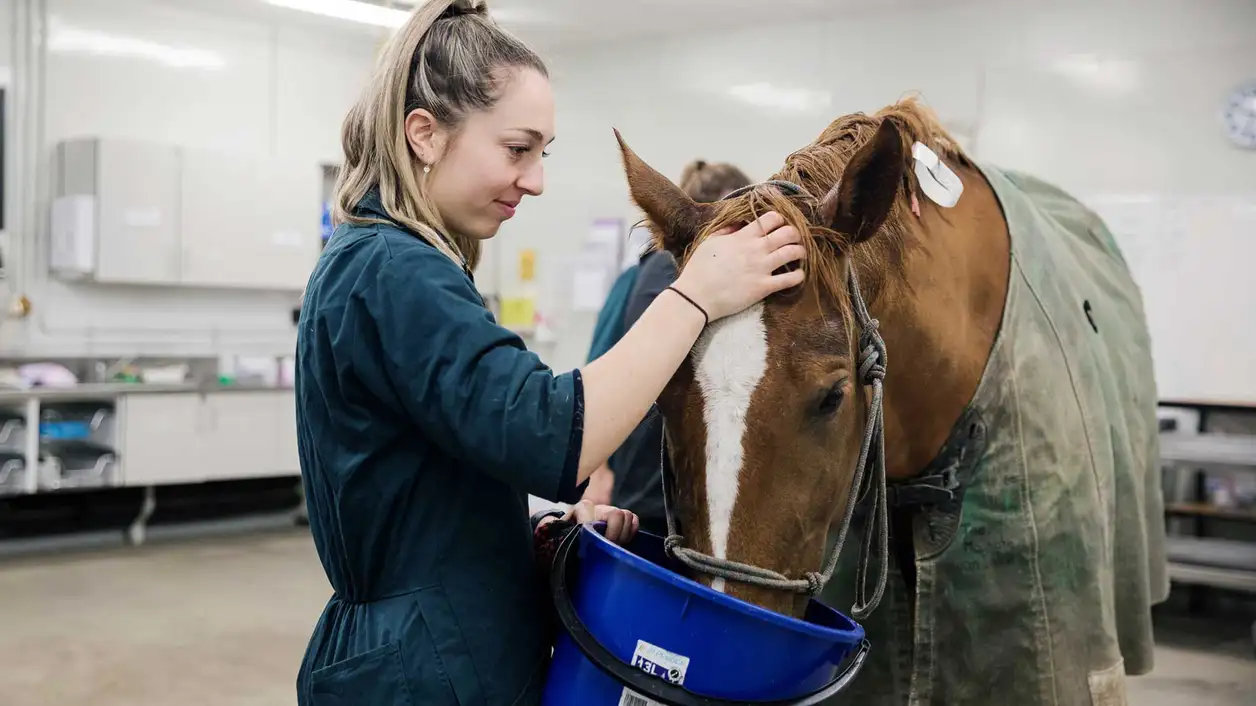
Equine Veterinary Clinic
The clinic offers a broad range of medical and surgical expertise. It includes:
- patient boxes and paddocks
- surgery
- separate isolation unit.
Students can assist with or observe procedures.
Location: Manawatū campus
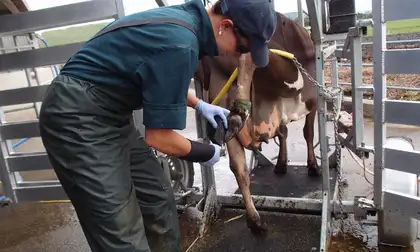
Farm Services Clinic
Expert care for livestock and lifestyle animals such as alpacas, goats and poultry. Our new hospital includes:
- patient boxes and yards
- surgery
- separate farm animal isolation unit.
Students assist with or observe procedures.
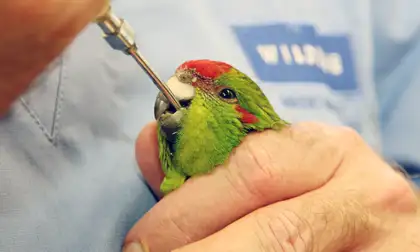
Wildbase Hospital
A specialist hospital for wildlife, with equipment and facilities including:
- five patient wards to separate prey from predatory species
- intensive care and isolation wards
- surgery suite
- endoscopes
- portable radiographic unit.
Students can assist with or observe procedures.
Location: Manawatū campus
Meet our graduates
“The main thing I got out of the MVM was confidence! This has helped me realise how much I have to offer in relation to experience, knowledge and teaching our new graduates in practice.”
“Massey University was the obvious choice. My supervisory team is made up of top representatives in their field. We meet regularly and I feel like I can always approach them for a chat.”

Accreditations and rankings

ShanghaiRanking - veterinary science
Massey ranks 42nd in the world for veterinary science — and in the top 4 in Australasia — in ShanghaiRanking's Global Ranking of Academic Subjects.
QS Ranking - Veterinary Science
The Massey is ranked by QS (Quacquarelli Symonds) as 21st in the world for veterinary science.
Work at the School of Veterinary Science
The School is based in Palmerston North, a compact and family-friendly city in the Manawatū region of New Zealand.
We are always keen to hear from experienced applicants. Roles can range from teaching and research positions to veterinary nurses for our state-of-the-art clinics and hospitals.

Preliminary design for the school's new complex, by CCM Architects
Rebuild of the School of Veterinary Science
Jan 2022
Despite COVID-19 delays, work on the School's new complex is progressing with new facilities opening in 2022. The $160million upgrade will provide state-of-the-art teaching, research and clinical facilities that are environmentally sustainable and reflect New Zealand’s unique culture and heritage. The 10-year building programme is due to be completed in 2025.
As New Zealand’s only Veterinary School, the new facilities are also required to maintain accreditation status with the Australasian Veterinary Boards Council and the American Veterinary Medical Association Council on Education.
Our new Farm Animal Hospital and Student Learning Complex are due to be in use in the first semester of 2022. This includes a dynamic learning space for students to practice and perfect clinical skills on specially designed mannequins and models before moving on to live animals.
Head of School Professor Jon Huxley says the facilities will be cutting-edge. “Although the COVID-19 pandemic has highlighted the importance of flexible learning environments, hands-on learning experiences and interactions with the public through our teaching hospitals remain vital to developing our veterinary students' skills to work in New Zealand and internationally.”
Research, teaching and student facilities
Ground work for stage three begins April 2022. A new two-storey building will replace the 1960s Veterinary Tower, including:
- research laboratories and facilities for the infectious diseases, pathobiology, and animal welfare science and bioethics research groups
- multipurpose teaching laboratory
- staff offices
- student hub.
Cultural design work with mana whenua
Massey is working with Rangitāne, as mana whenua, on cultural designs to be incorporated in the new facilities.
Rangitāne artist and Tohunga Whakairo Warren Warbrick, who has worked with Massey on other projects, will provide guidance and expertise.
Contact the School of Veterinary Science
The school is at the heart of Massey’s campus in Palmerston North, within easy walking distance of the Veterinary Teaching Hospital and other facilities.
School of Veterinary Science – Manawatū campus
- Location
Use our Manawatū campus maps or find us on Google Maps.
Looking for a staff member? Visit our staff directory or use Expertise search.